Bean There, Done That: Legumes for Your Protein Fix
When it comes to finding the source of plant-based protein, legumes are the unsung heroes of the culinary world. Not only are they packed with essential nutrients, but they also come with a variety of textures and flavors that can elevate any dish. Whether you’re a dedicated vegetarian, a vegan, a flexitarian, or simply someone looking to diversify your protein sources, this guide will introduce you to the diverse legumes and why you should make them a staple in your diet.
Why Legumes are Protein Powerhouses
First, let’s talk about why legumes are essential for your protein needs. Legumes and protein go hand-in-hand like tea and biscuits. They are rich in amino acids, the building blocks of protein, which play crucial roles in muscle repair, immune function, and overall body maintenance. Plus, they are loaded with fibre, vitamins, and minerals, making them a well-rounded addition to your meals.
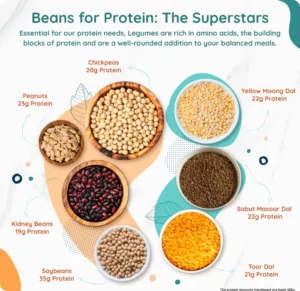
Beans for Protein: The Superstars
- Soybeans: When pondering which beans have the highest protein, soybeans often come to mind. 100g of soybeans boasts about a whopping 35 grams of protein, making them the legume with the highest protein content. They are the basis for many plant-based products like tofu, tempeh, and edamame, making them incredibly versatile. You can also add them to prepare recipes like soya matar, soya pulao, soya frankie, and so on.
- Kidney Beans: Kidney beans are another excellent choice when looking for beans with protein. They provide about 19 grams of protein per 100 grams. Apart from the usual Rajma Chawal, they are also perfect for salads.
- Cowpea Beans: The humble cowpea beans offer you approximately 21 grams of protein per 100 grams, and can be a gr eat addition to your diet in various forms like Lobia Masala (spiced cowpea curry) or Lobia Pulao (flavoured rice with cowpeas).
- Lentils: While not technically a bean, lentils also belong to the legume family and are a source of protein. Some commonly used lentils in Indian cooking include Moong Dal (Yellow lentils) – 22.87g protein/ 100g, Toor Dal (Pigeon Peas) – 21.70g protein per 100g, and Sabut Masoor Dal (Brown Lentils) – 22.49g protein per 100g. They can be eaten with rice or roti, or made into comforting dals, khichdi, or sambar with vegetables.
- Peas: Peas are also another choice of legume for adding protein to your balanced diet. 100 grams of dried peas provide around 20 grams of protein. They are incredibly versatile; you can add them to your regular vegetables, add some to your breakfast omelets, or add boiled peas to your salad; they are going to add a protein punch wherever they go.
- Peanuts: Peanuts are not only a source of good fat but also offer about 23.65 grams of protein per 100 grams. They can be simply had as a snack or added to salads. Crushed peanuts are also a great flavour enhancer for many recipes. However, be mindful if you are allergic to peanuts, as they may cause allergic reactions.
- Chickpeas: Chickpeas, or Kabli Chana as we know them as, are another easily available source of protein. From a hot bowl of chhole alongside rice, or a plate of salad with boiled chickpeas, cucumber, onion, and tomato, to a dip of hummus, there are many ways to incorporate this healthy legume to your diet. 100 grams of dry chickpeas offer you about 20 grams of protein.
How to Incorporate More Legumes into Your Diet
Now that you know which beans are ll sources of protein, the next step is incorporating them into your daily meals. Here are some fun and delicious ways to do just that:
- Salads: Mix boiled kidney beans and boiled chickpeas with some chopped veggies, olive oil, and lemon juice for a refreshing and protein-packed salad.
- Lentil Soups: Legumes like moong dal make excellent bases for hearty soups. They add both protein and texture to your dishes.
- Hummus and Dips: Chickpeas are the star of hummus, but you can also experiment with lentil spreads or green peas.
- Indian Curries: Kidney beans, cowpea beans, or soybeans in the good, old flavourful gravy of onion and tomatoes with the fragrance of garam masala can make any meal better.
- Burgers and Patties: Mash up some boiled peas or chickpeas with spices and breadcrumbs to create delicious and healthy veggie burgers.
Tips for Cooking Legumes
Legumes naturally contain antinutritional factors such as phytates and enzyme inhibitors, which can hinder nutrient absorption. Therefore, soaking and cooking legumes thoroughly are crucial steps to significantly reduce the levels of these compounds, and making the nutrients more bioavailable. Soaking and rinsing your legumes also helps to remove any debris or unwanted elements present in them. Additionally, you may also add a bay leaf, garlic, or onion to your cooking water for extra flavor.
Conclusion
Legumes are a versatile source of protein, and there’s always something to suit every palate. Incorporating these nutrient-dense powerhouses into your diet can be both delicious and beneficial for your health. So, the next time you’re pondering what are the various sources of protein that can be included from the legume family, you’ll know exactly where to turn. However, do consult your healthcare professional to understand what suits you the best. Happy cooking!