A Vegan and Vegetarian’s Guide to Protein-Rich Foods
Plant-based diets are gaining popularity in today’s times and we are here for it. The only challenging part is to consciously make sure that your recommended amount of protein per day is met. Want to include protein in your meal as a vegetarian or vegan? You have stumbled upon the right article!
Proteins are the building blocks that are critical for the growth and repair of tissues, boosting your metabolism, and keeping you feeling full and satisfied. With so many vegan & vegetarian protein sources to choose from, we often get overwhelmed. If you are one of them, fret not. We have done the research so you don’t have to!
Read to discover some of the best vegan & vegetarian protein-packed foods that will keep you feeling strong, satisfied, and energised and aid in meeting your recommended protein intake. From legumes and grains to nuts, seeds, and dairy alternatives, we’ll explore the best options to keep you fuelled.
5 Protein-Rich Food Sources You Must Know
Wondering how to eat more protein? Here are 5 protein-rich foods that you can consider including in your daily diet to lead a healthier life.
1.Legumes
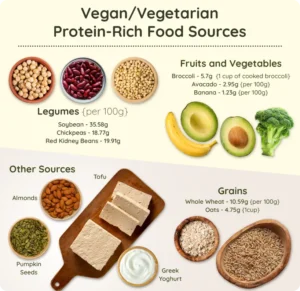
- Soybean & Soya chunks: Soybean and soya chunks are renowned for containing high amounts of protein, with the protein value of soybean per 100g being 35.58g. You can add them to your curries, biryani, or prepare a soya chunks fry recipe.
- Chickpeas: These nutritious legumes are a staple in many cuisines. From hummus to falafel, chickpeas offer a hearty dose of protein, with the protein value of chickpeas per 100g being 18.77g.
- Lentils: Whether you prefer brown, red, or green lentils, they’re all excellent sources of protein and fibre. You can use them in soups, stews, or salads or simply cook and consume in the form of dal.. Lentil dal provides 24.35g of protein per 100g, though the content may vary slightly depending on the type of lentil.
- Beans: From kidney beans to black beans, beans are a versatile and affordable protein option, with black beans providing 19.01g of protein per 100g and red kidney beans offering 19.91g per 100g. You can enjoy them in rajma chawal, or chana masala along with Phulkas made from whole wheat..
2. Grains
- Quinoa: This ancient food is a protein, meaning it contains all nine essential amino acids. Wondering how to integrate this superfood into your daily diet? You can use it to whip up salads, bowls, and even desserts.
- Whole Wheat: Wheat contains a high content of protein, all thanks to the presence of gluten in it. One of the best ways to incorporate this protein-rich food into your diet is through everyday Indian dishes like chapatis, parathas, or phulkas made from whole wheat flour. Note that whole wheat is packed with the goodness of protein as well as and fibre.
- Oats: Oatmeal is a nutritious and filling breakfast option. But did you know that it is a rich source of protein? One cup of cooked oats contains about 4.75g of protein. So, go ahead and prepare an overnight oat jar for yourself if you want to kickstart your day on a high-protein note. We suggest you top it with almonds, walnuts, and chia seeds for an extra protein punch.
3. Nuts and Seeds
- Almonds: Almonds are a great source of protein and healthy fats. You can enjoy them as a snack, in trail mix, or added to yoghurt or oatmeal.
- Chia Seeds: These tiny seeds are packed with protein, fibre, and omega-3 fatty acids. Add them to smoothies, yoghurt, or baked goods to include them in your everyday diet.
- Pumpkin Seeds: Pumpkin seeds, also known as pepitas, are a great source of protein and zinc. Sprinkle them on salads, yoghurt, or oatmeal.
To read more on this, you may explore ‘Nuts and Seeds: How These Tiny Powerhouses Pack a Protein Punch.’
4.Dairy and Dairy Alternatives
- Greek Yoghurt: Greek yoghurt is thicker and creamier, making it a great source of protein. It may also aid in supporting gut health due to its probiotic content.
- Tofu: Tofu is another versatile protein source that can be used in a variety of dishes. It is one of the best sources of protein for vegans.
- Tempeh: Tempeh is a fermented soybean product that is high in protein and fibre. Some popular tempeh recipes that you can consider trying are marinated peanut tempeh and tempeh stir fry.
5.Fruits and Vegetables
- Avocado: Avocados are a good source of healthy fats and protein, providing 2.95g of protein per 100g. You are spoilt for choice when it comes to adding this superfood into your diet. From guacamole, salads to toasts and burrito bowls, there are a plethora of ways in which you can enjoy avocados.
- Banana: Bananas are a rich source of potassium and provides 1.23g of protein per 100g. A great addition to smoothies, fruit bowls, or when eaten simply as a snack!
- Broccoli: Broccoli is a nutrient-dense vegetable that is also a good source of protein, with 1 cup of cooked broccoli providing 5.7g of protein.
- Spinach: Spinach is another high protein vegetable that you must integrate into your daily diet to have a well-balanced diet. It provides 2.14g of protein per 100g and is also packed with vitamins, minerals, and other essential nutrients, making it a great source of fuel for vegetarians.
The Final Verdict
Remember, the key to a healthy vegetarian/vegan diet is to incorporate a variety of protein sources into your meals. Experiment with different high protein vegan and vegetarian foods and find what works best for you.. Our advice is to branch out and include a variety of sources of protein in your diet instead of just reaching out to one or two sources.
With proper planning, it’s easy to maintain a healthy and stronger lifestyle, whether you follow a vegan or vegetarian diet.
For vegetarians, dairy products like milk, curd, and paneer are also great sources of protein. Milk can be enjoyed on its own or added to smoothies, while paneer and curd are versatile and can be added in various dishes. These dairy options can also aid in meeting your protein intake, overall health and provide essential nutrients.
However, it’s always better to consult a healthcare professional to better understand your daily nutrient requirements, especially if you have specific health goals or a medical history.